7 Card Blackjack Rules | How to Play and Win This Unique Variant?
7 card blackjack, particularly the British variant, is a compelling twist on the traditional blackjack game. It adds layers of complexity, strategy, and a dash of unpredictability.
Unlike the standard casino version where players aim for a hand totalling 21, 7 card blackjack operates under a unique set of rules.
Played more like a strategic matching card game than a betting contest, this variant is gaining popularity in casual gaming circles across the UK. Let’s explore how to play, understand the special card powers, and master the strategies that can lead to victory.
What is 7 Card Blackjack?
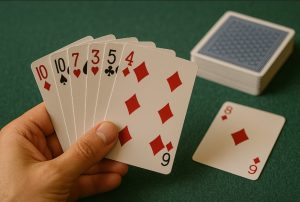
7 card blackjack is a unique and engaging card game that differs significantly from the traditional casino blackjack most players are familiar with.
In this variant, the objective is not to reach 21 or beat the dealer, but rather to be the first player to discard all seven of your cards. It’s a fast-paced, strategic matching game where cards are played by matching either the suit or the rank of the previous card on the discard pile.
The game typically uses a standard 52-card deck, though players may add jokers or agree on custom rules. Each player receives seven cards, and the rest are placed face-down as a draw pile.
One card is turned face-up to start the discard pile. Players take turns in a clockwise direction, unless the direction is reversed by a power card. If a player cannot play a card that matches the suit or rank, they must draw one from the central pile.
The real twist comes from the ability to play multiple cards in one turn through suit or rank chaining and the use of power cards, which can force draws, skip turns, or reverse the order of play. This dynamic makes each round unpredictable and requires both tactical planning and a sharp memory.
How Does It Differ from Classic Blackjack?
While they share the name “blackjack,” this version bears almost no resemblance to the traditional casino game. Classic blackjack involves players trying to build a hand as close to 21 as possible without exceeding it.
The game is played against a dealer and involves betting, hitting, standing, and splitting pairs based on numerical card values.
In contrast, 7 card blackjack is more closely aligned with card-shedding games like Uno or Crazy Eights. Here’s how the two games differ in core elements:
| Feature | Traditional Blackjack | 7 Card Blackjack |
| Objective | Reach 21 without busting | Discard all 7 cards first |
| Opponent | Dealer | Other players |
| Use of Suits | Irrelevant | Crucial |
| Power Cards | Not present | Several, including 2, 8, 10, J, A |
| Betting | Essential | Optional or absent |
The lack of betting, the absence of a dealer, and the addition of power card mechanics transform 7 card blackjack into a completely different type of game — one that focuses on card management, timing, and player interaction rather than probability and bankroll strategy.
How Do You Play 7 Card Blackjack?
British 7 card blackjack follows a structured format that starts with dealing seven cards to each player. The dealer then places the remaining deck face-down at the centre and flips the top card onto a separate pile to begin the discard process.
Gameplay proceeds clockwise from the dealer’s left unless the first card flipped is a 7, which reverses the order.
The player whose turn it is must match either the suit or the rank of the card on the discard pile. If unable to do so, they draw a card from the central deck.
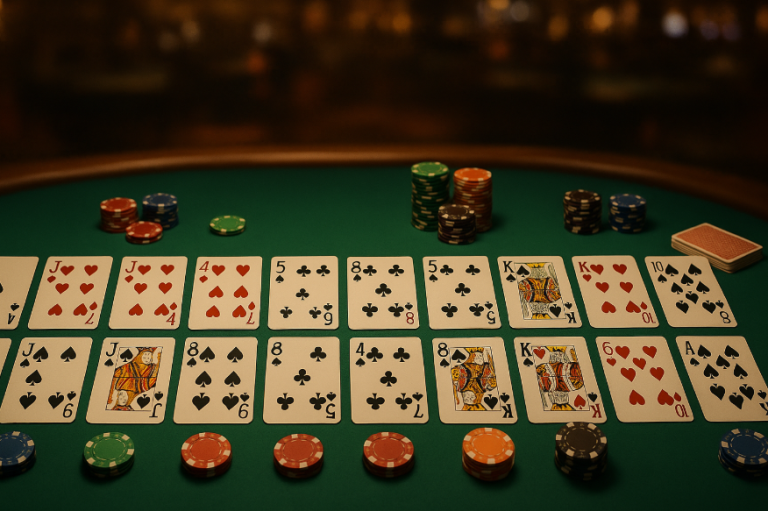
Players can discard multiple cards in a single turn, as long as each card follows the last one by either suit or rank. For example, a player could lay down a sequence like 8 of Hearts, 8 of Spades, 9 of Spades, 9 of Diamonds, and so on. This flexibility encourages players to organise their hands for strategic multi-card moves.
Key mechanics include:
- Matching either suit or rank on the discard pile.
- Drawing from the deck if no playable card is available.
- Chaining multiple cards if each one follows the previous by suit or rank.
- Monitoring direction of play, which can be reversed by specific cards.
In games with just two players, the dealer initiates the first move. The flow of play continues uninterrupted unless power cards alter the game’s direction or skip turns.
What Are the Special Power Card Rules in 7 Card Blackjack?
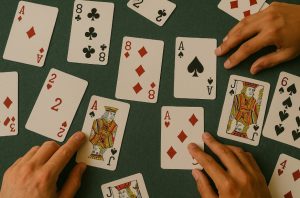
One of the defining features that sets 7 card blackjack apart from most other card games is the inclusion of power cards. These are specific cards within the standard 52-card deck that carry unique effects beyond the regular matching gameplay.
Power cards introduce elements of surprise, strategy, and disruption, allowing players to control the pace of the game or throw their opponents off balance. Understanding how these cards work is essential for anyone looking to play competitively or even casually.
2 – The “Draw Two” Card
The 2 card is one of the most disruptive cards in the game. When a player places a 2 on the discard pile, the next player must draw two cards from the central deck unless they also have a 2 to play.
If they do, the draw count stacks, and the subsequent player must either add another 2 or draw the total number accumulated.
This chain can escalate quickly, especially in larger groups, resulting in a single player being forced to draw six, eight, or even more cards. Because of this potential, 2s are often held onto as defensive or offensive tools for maximum impact.
Jack – Penalty and Protection
Jacks are perhaps the most strategically complex power cards. A black Jack (spades or clubs) requires the next player to draw five cards.
If they respond with another black Jack, the total penalty increases to ten cards. This stacking can continue until someone is unable to counter, at which point they absorb the full penalty.
However, a red Jack (hearts or diamonds) can cancel the effects of a black Jack. This mechanic adds an extra layer of strategic defence, where players must decide when to use their red Jack to avoid heavy penalties or save it to counter even bigger threats later.
10 – Reverse Direction
Playing a 10 reverses the current direction of play. For example, if the game was proceeding clockwise, it will now move counter-clockwise.
This effect is particularly useful in multiplayer games where a player may wish to avoid a penalty card from a specific opponent or strategically redirect the flow to someone more vulnerable. Some variations also use 7s as the reverse card, but 10 is the most commonly accepted choice.
8 – Skip a Turn
When an 8 is played, the next player in sequence loses their turn. This can be an excellent way to delay an opponent who is close to winning or to skip over a player who recently benefited from a chain play. Stacking 8s is allowed in some house rules, resulting in multiple skipped turns.
Ace – Suit Control
The Ace is one of the most versatile and valuable power cards in the game. It allows the player to change the current suit being played, regardless of the card it is placed on.
For example, if the last card was a 6 of Diamonds, and a player uses an Ace, they can declare the next suit as Clubs. However, an Ace cannot be placed on top of another power card such as a 2, 8, Jack, or 10. This restriction keeps the Ace balanced and ensures it’s not overpowered.
The Role of Timing
Timing the use of power cards is a crucial aspect of 7 card blackjack. Using them too early might waste their potential, while holding onto them too long could result in missed opportunities.
Effective use of power cards can shift the game’s momentum, block an opponent’s win, or open up an advantageous chain play. Knowing what to play and when is what separates experienced players from beginners.
Are There Optional Rules in British 7 Card Blackjack?
7 card blackjack in the UK often includes house rules or optional variations. These additions allow for creative gameplay and make each session unique. Though not officially standardised, these variations are widely accepted in casual play.
- Bring Backs: This rule allows previously eliminated players to return if specific conditions are met, usually triggered by a designated card or agreed mechanism.
- Jokers: One or two jokers can be added to the deck. Their function varies, but they often act as wild cards or introduce new power mechanics, such as forcing all players to draw one card or swapping hands with another player.
- Jacks on Twos: Players can respond to a 2 by playing a Jack instead of another 2. This continues the draw sequence, often with a more severe penalty.
- Suited Jacks on Twos: In a stricter version, Jacks can only be played on 2s if they match the suit. This limits the flexibility of the Jack response but rewards suit-based strategy.
- Queens: A card of the same suit can always be played on a Queen, regardless of the rank. This rule allows more options for chaining and escaping from potentially restrictive situations.
These variations require clear communication among players before the game begins. A quick pre-game rundown of rules prevents confusion and ensures a smooth experience.
What Are the Winning Strategies for 7 Card Blackjack?
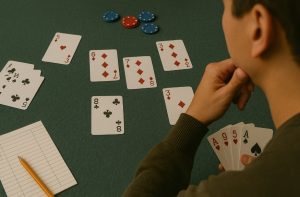
Success in 7 card blackjack isn’t purely based on the luck of the draw — it’s heavily influenced by your ability to read the table, manage your hand, and use power cards strategically.
Unlike traditional blackjack, where mathematics and probability play dominant roles, this variant requires timing, observation, and tactical execution. The following strategies provide a structured approach to playing smarter and improving your chances of winning.
1. Hold onto Power Cards Until the Right Moment
Power cards are your most valuable assets. Whether it’s a 2 to force an opponent to draw, a 10 to reverse the play direction, or a black Jack to cause disruption, these should not be discarded carelessly.
- Use 2s and Jacks to disrupt players with low card counts.
- Save Aces for when you need to control the suit or stop an opponent’s momentum.
- Drop power cards when you see an opportunity to turn the tide of the game.
Well-timed power card plays can prevent opponents from going out and give you the chance to reduce your hand while they recover.
2. Chain Cards for Efficient Hand Reduction
Whenever possible, plan to play multiple cards in one turn by chaining sequences. Chaining is the process of playing cards of the same suit or matching rank in a continuous pattern.
- For example: 7♠ → 8♠ → 8♦ → 9♦ → 10♦.
- Chaining reduces your hand size significantly in one go.
- Group your cards by suit and look ahead to possible play sequences.
This not only helps you win faster but can catch other players off guard.
3. Observe Opponents and Track Their Patterns
Keeping a close eye on what suits or ranks your opponents are playing gives you insight into their potential remaining cards.
- If a player is consistently playing Hearts, changing the suit might restrict their next move.
- Watch how opponents react to power cards — hesitation or drawing often indicates a weak hand.
Use this information to play defensively or aggressively as needed.
4. Control the Suit with Aces
An Ace lets you dictate the next suit — a powerful tool if you have a dominant hand in one suit.
- Avoid wasting Aces early; instead, wait until you can use them to continue a long chain or block an opponent.
- Consider suit control as a strategic manoeuvre, not just a way to avoid drawing.
5. Adapt to the Direction of Play
In games with more than two players, direction plays a critical role. When a 10 reverses the order, adjust your strategy quickly.
- Use reversals to skip over dangerous players or avoid strong hands.
- Keep a mental note of the sequence, especially after power cards are used.
How Does 7 Card Blackjack Compare to Other Blackjack Variants?
While other blackjack variants like Spanish 21 and Pontoon retain the core mechanics of aiming for 21, 7 card blackjack redefines the concept entirely.
It is more closely related to games like Uno or Crazy Eights than traditional blackjack, though it retains the name due to its card origin and gameplay lineage.
| Game Variant | House Edge | Strategy Level | Betting Involved | Popular Region |
| Classic Blackjack | Low | High | Yes | Global |
| Spanish 21 | Medium | High | Yes | USA |
| Pontoon | Medium | Medium | Yes | UK/Australia |
| 7 Card Blackjack | None | Moderate | Optional | UK |
Because there’s no house edge in 7 card blackjack, it appeals more to casual players and social gatherings. Its flexible rules and low-stakes nature make it ideal for parties, family games, or informal competitive matches.
Where Can You Play 7 Card Blackjack in the UK?
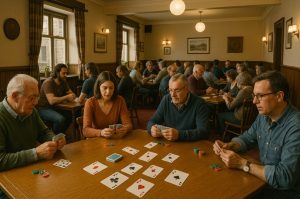
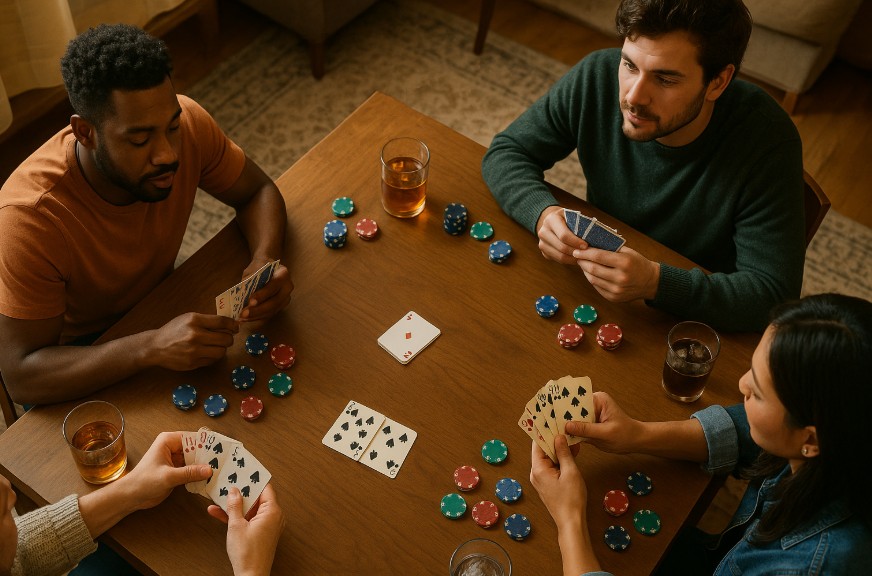
This variant is rarely found in commercial casinos but thrives in private environments. It’s a popular game for households, community centres, and pub nights. Some game cafes or tabletop gaming communities also feature it as part of casual events.
Online, there are forums and gaming communities where people simulate the game or discuss rules and strategies. While real-money versions are rare, virtual platforms and apps for casual card games sometimes include it under alternative names.
It’s important to ensure compliance with UK gambling laws if money or prizes are involved. Games played for entertainment in private settings usually fall outside regulatory requirements.
Conclusion
7 card blackjack brings a fresh and entertaining twist to the traditional card game landscape. It’s ideal for those seeking a more dynamic and unpredictable game.
Whether you’re playing casually with friends or integrating your own house rules, this version offers hours of engaging gameplay. It’s a great choice for players who enjoy card strategy games without the pressure of gambling.
FAQs About 7 Card Blackjack
What happens if you forget to say “Last Card”?
If a player forgets to announce “Last Card” when down to one card, they must pick up another card as a penalty.
Can multiple power cards be played in one turn?
Yes, players can stack power cards like 2s or Jacks, especially in house rule variations.
Is 7 card blackjack legal to play for money in the UK?
Yes, in private settings. If played in a public venue for money, the venue must be licensed for gambling.
Can Aces be played at any time?
Aces can be played at any time, but not on top of another power card.
How many players can participate in one game?
Typically between 2 to 6 players. Larger groups may require additional decks or modified rules.
Can jokers be included in 7 card blackjack?
Yes, some variations allow jokers, often giving them wild card properties or special effects.
What is the best way to win 7 card blackjack consistently?
Managing your power cards, playing multiple cards in sequence, and paying close attention to opponent actions are the best strategies for consistent wins.
Disclaimer:
This content is intended for informational purposes only. We do not encourage or endorse gambling or any associated services. Always gamble responsibly and within your limits.